
They would all be over my shoulder saying, “Do that.” and “Say that.”
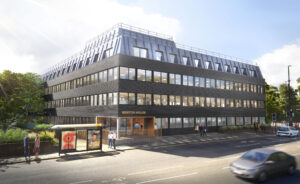
Benton House which later became an NHS facility
When I started, they were gathering all of the directors from different shipyards because it had been brought under the one umbrella of the government. They built the new building called Benton House in Jesmond; it’s right on the corner an orange brand new built and they just brought people up. There was people from London and everywhere. It was statistics and all that sort of thing going on and where I worked, when the directors were travelling to different areas, different countries to have meetings about wage negotiations and getting orders for different shipyards and things, I used to arrange all of their travel and chauffeurs and all of the rest of it that went with it, that was very interesting.
I used to be in touch with all the travel agents because in them days you had to have a great big bible with train times, so I would arrange that, then look for the transfer, so I had all of that to do.
But the most interesting part of my job was when there was the wage negotiations. I used to have to fight my way through all the striking shipbuilding men, standing like that, you know, “Excuse me.” It had nothing to do with me what they were doing. Well, it might have been a picket line, but they weren’t going to do much for a young lass going in. They were like, “Hello Pet,” you know, “Let the bairn through.” I never thought about it, you just went in.
They would have all these meetings. There would be directors and the unions and all of them would be there, and I would be waiting for them coming out of the meeting and what had been discussed and what the plans were and then I would type it all up.
They would all be over my shoulder saying, “Do that.” and “Say that.” and I would be typing it all up and I would put it on to a ticker-tape. There was five machines and I would dial a number and it would start ticking and that would be sending that information to one shipyard. Then I would link it into another machine and dial up and that would go to another, and I’d do that until I’d covered all of the shipyards in the country and all the union bases and the newspapers.
I was there until very late at night. I was only young so it was quite a lot of responsibility when I think about it now, I suppose. When you’re young you don’t worry about it, you just crack on and do it.
We’d wait for the actual results of the meetings and negotiations, and I would then sit and type it up and it was a telex, they used to have about 4 or 5 machines and you would run the ticker tape from one to the next. It just used to save time because if you were just doing it on one machine you would have been there for days.
There was three different floors in Benton House and there was a lot of men but there was a lot of women as well. I remember particularly when Margaret Thatcher got into power and the devastation on everybody because they knew there was going to be massive changes. She shut all the shipyards and everything and all them men were out of work. Everybody’s mortgages shot up and all the wage problems came from that and then the strikes and it was just a nightmare from then.
My husband worked in Clelland’s shipyard, from then on it just went downhill and he was on 3-day weeks. Everybody we knew was skint, people were losing their houses, they couldn’t afford. It decimated the area and then Margaret Thatcher was saying “Get on your bike and move to another area.” My husband did eventually get a job in London and he used to get the bus down on a Sunday night and then the bus home again on a Friday night. It wasn’t a living wage really it was a really bad wage he was getting in London you know so times were hard then, yeah, they were, really hard.
Everybody you knew, at some point, worked in the shipyards, my brother did, our friends did. And then when the shipyards closed down it was just all the men having to work away and, basically, people were skint. It was awful it was a really hard time, but you just got on with it because that’s the way you were brought up, you just got on with it.
Margaret was interviewed in 2025 as part of the Women in Shipbuilding project.