
The skills that these people had, both the men and the women, were really extraordinary
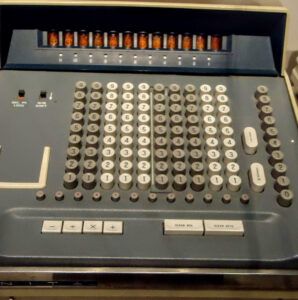
A comptometer from the 1960s
My mother’s name was Rita Scott and she was born in 1908 and at the time when shipyards were really low in the 30s, was the only member of the family working and she was a comptometer operator at the Swan Hunter shipyard.
The men both sides of my family, were shipyard workers but of course, there was the men working and the women very little really. By then of course it was the second world war time and that struck everybody.
She wasn’t working she was a very good writer, her family were all very musical and that was their means, they had a piano and the whole family could sing and that was a very important part of their lives.
I was born at The Green hospital in Wallsend. I was born in 1942, but we lived on the other side of the main road, the Coast Road. The top bit of Wallsend, within sight and smell of the The Rising Sun pit heap but we were none of us pit people, nobody was coal and pit in my family they were the other side of things. My grandfather was a carpenter, a cabinet maker, top of his profession.
But my father he was not a shipyard worker. But the skills that these people had, both the men and the women, were really extraordinary. So, there was an awareness of skills and pride in skills.
My father had gone to war and so my first memories of my mother was when she was looking after my sister and myself alone in the house. There was the letters in the envelopes, blue crispy envelopes and when one of those came from my father, my mother would come and I could feel even though I was just a tiddler, the tensions and the tears. She had only letters for years and I hadn’t met him, I didn’t know anything about him really except the letters, these envelopes. I remember we were in the kitchen and one letter had come and obviously my mother had opened it and read it and then she had gone to the sink to do the washing up and I remember going, “Don’t cry mummy, don’t cry,” you know and I couldn’t picture the man that she was crying about.
But of course, we had a lot of freedom as well because the valley was behind our house, and of course a shelter in the garden you know, the war shelter. But we had a freedom that I think children nowadays have no idea of and that was great. Learning doesn’t leave you does it and I think with the musical family that she belonged to and this responsibility that she’d had that brief period of time when she was the only one bringing in money, it must have given her a different way of looking at things, a different strength, mental and physical strength I think.
She began writing for Elsdon’s Gossip, she did a lot for that. It was a column in the local paper and that was a very important part of her life, something she went on doing for a very long time and really it was excellent. She was an intelligent woman, and, for the time, it was hard for intelligent women to actually do something.
Liz was interviewed in 2024 as part of the Women in Shipbuilding project.